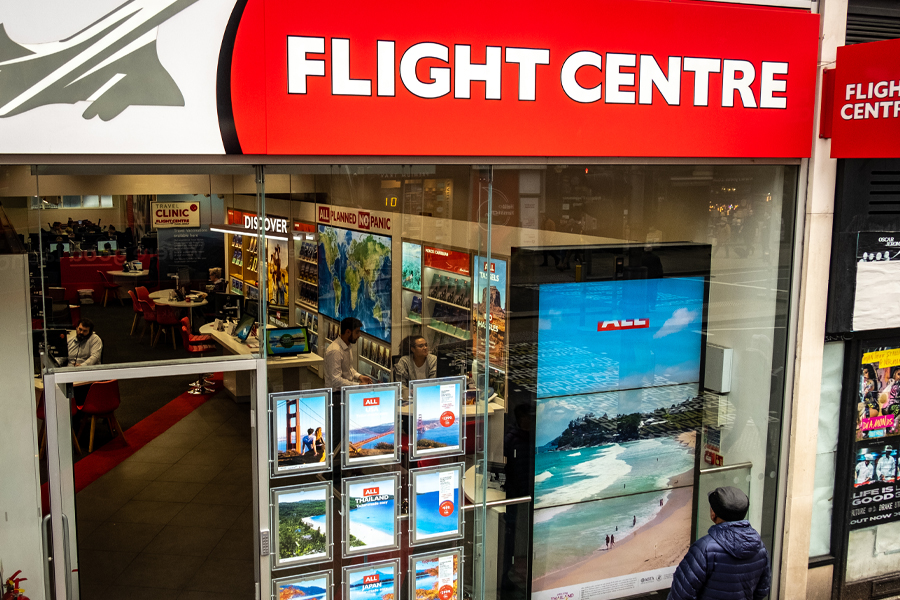
Almost half (45%) of businesses plan to increase their travel budgets in fiscal year 2026 (July 1, 2025 – June 30, 2026) — a 3% increase over FY 25, according to a State of the Market survey from Flight Centre Travel Group (FCTG).
Of the businesses intending to spend more, 9% intend to increase spending by more than 20%, while 36% expect increases of up to 20%.
Meanwhile, 37% expect spending to remain steady, and just 8% anticipate a reduction — an encouraging signal for the business travel sector moving forward, according to the report.

In the Americas, travel spending intentions closely mirror the global outlook, with 47% of respondents planning to increase spending in FY26 — up 10% from last year — while only 10% expect a decline.
Charlene Leiss, president of FCTG Americas, said, “With macroeconomic challenges beginning to ease globally, the survey shows that customers have a more optimistic outlook for the year ahead.” Corporate travel, she said, “is increasingly seen as a non-discretionary spend — a critical component of business success.” These figures, said Leiss, “reflect growing confidence and a renewed commitment to travel as a driver of growth and innovation.”
The survey also revealed that meetings, events and conferences are becoming a larger focus for business travel budgets. Globally, 33% of companies plan to allocate over half of their travel spend to this sector — up from 28% last year. In the Americas, that figure rises to 36%, reflecting a continued emphasis on in-person connection and collaboration.
Leiss said: “It’s encouraging to see businesses continuing to invest in travel as a way to deepen relationships, increase collaboration and create opportunities. The industry’s resilience is clearly reflected in these upward trends.”
The survey was conducted online between June 1, 2025 and July 31, 2025. The target respondents were FCM Travel and Corporate Traveler customers, specifically decision-makers, travel managers and authorized travel bookers. (FCM Travel and Corporate Traveler are FCTG;s corporate travel divisions.) All FCM Travel and Corporate Traveler regions were included. A random sample of 1,234 responses was obtained.