
When incidents around passenger security and duty of care make headline news, the wellbeing and safety of meeting participants rise to top-of-mind concerns for travel managers and meetings planners responsible for making choices around group ground transportation solutions.
In planning events, there’s a chain of schedules, travel itineraries and appointments that need to come together more or less flawlessly to bring everyone together at the right place, at the right time. Still, as we all know, the best-laid plans can go wrong. Unexpected delays in the air and on the ground can result in disruptions or diversions, missed connections, drama and headaches, both for attendees and planners.
“The best planned meeting can go terribly awry if ground transportation to the event is disrupted,” says Robert Sanders, COO of LEROS Meetings and Incentives.

However, thanks to an extensive network of sophisticated ground transportation options, travel arrangers can rally from such potential disaster. Black car and chauffeured services are ready to transport VIPs, executives and speakers, while chartered airport shuttles move attendees to multiple hotels. Add to the mix passenger vans, mini-buses, passenger buses and motor coaches for large delegations and incentive excursions.
While ground transportation accounts for a relatively small portion of overall travel spend, a Global Business Travel Association survey conducted with the National Limousine Association in June 2024, indicates it is critically important for “duty of care, traveler satisfaction, and operational efficiency” in meetings and events. Group transportation is expected to be a strong segment, driven by the ongoing return of in-person meetings.
Rick Versace, president and CEO of A1A Global Ground Transportation says as travel managers and meeting planners raise the bar on duty of care, professional ground transportation isn’t a luxury. “It’s a strategic necessity,” Versace says, adding, “Through organizations like the National Limousine Association, our industry continually invests in research, safety standards, training and advocacy to meet those expectations.”
GBTA’s ground transportation research confirms the strategic value of group transportation. Since the post-pandemic recovery of business travel is being largely driven by in-person meetings and events, group transportation is considered essential to sustain this trend.
Consolidating travel into a single process, such as shuttle service for groups, is more efficient and easier to manage than numerous individual trips, and the majority of travel managers (63 percent) see shuttle/van services as more cost-effective for group and project travel than individual transportation. Further, ground transportation for meetings and events, specifically shuttles/vans, is widely considered more sustainable than individual transportation options, which helps companies with their green travel goals.
Games of Chance
Ensuring traveler safety is a primary concern for both travel managers and travelers, according to the research. However, a perception gap exists, as many travelers underestimate the risks associated with ground transport compared to air or rail travel. In addition, while 85 percent of companies have a risk policy, only 55 percent of these policies thoroughly address the issues around ground transportation, leaving a “glaring gap” in risk management and duty of care, according to the GBTA report.
“Let’s start with the obvious,” says Versace. “It’s often an underestimated risk: The vehicle itself.” In professional group transportation, he explains, “vehicle condition is non-negotiable.” The National Limousine Association’s leading members are trusted vendors with demonstrated safety records, Versace says. Vehicles undergo rigorous pre-trip and post-trip inspections, digital maintenance tracking and proactive replacement cycles.
“We’re not waiting for something to break,” he maintains. “We’re preventing it from ever happening. Modern fleets now incorporate advanced safety technologies – collision avoidance, lane-assist, stability control – that significantly reduce risk, especially when transporting large groups.”
According to Joe Gulino, Sr., president of Gem Worldwide, maintaining vehicles in peak operating condition is a fundamental component of passenger safety. “Our teams follow rigorous preventative maintenance schedules that exceed manufacturer guidelines and comply with or surpass federal and state safety requirements,” Gulino says. “Daily pre- and post-trip inspections include checks of mechanical systems, tires, brakes, lighting, emergency equipment and interior components. Many fleets also use telematics and diagnostic technology that monitor engine health and provide real-time alerts, allowing proactive maintenance before issues arise.”
In short, GBTA surveys highlight that effective ground group transportation is not just a logistical necessity but a strategic element that impacts safety, cost and overall meeting success.
Meeting Planner’s Priorities
Meanwhile, meetings and events planners have their own set of priorities when choosing group ground transportation solutions. At the top of the list: Guest well-being, followed closely by reliability and punctuality. Ensuring guests arrive on time for sessions and events is critical to keeping the event on schedule and producing a professional outcome. Planners look for providers with a proven track record and contingency plans for unexpected delays, traffic, or vehicle breakdowns.
Patrick Fragale, director of strategic growth at My Limo, says professional drivers are trained to prioritize safety above all else, keeping timely performance in mind. “If an unexpected challenge arises, they immediately contact our dispatch team for rerouting. With real-time communication tools, our dispatch professionals can quickly redirect as needed to avoid delays and ensure the safety of everyone in the vehicle.”
Travel managers and event planners verify that the transportation company uses well-maintained and regularly inspected vehicles, employs licensed and experienced drivers with clean records, and carries appropriate insurance coverage.
Fragale says My Limo is diligent about vehicle replacement. “No vehicle in our fleet is more than two years old. Every vehicle is enrolled in a progressive, ongoing maintenance program. Chauffeurs complete a detailed daily inspection checklist, and our highly trained technicians perform comprehensive quarterly inspections to ensure every vehicle remains in top-performing condition – both safely and operationally.”
In addition, Fragale points out that CDL chauffeurs are limited to a maximum of ten hours of driving time per day, to reduce fatigue and ensure the highest level of safety for both passengers and drivers. “All of our vehicles are equipped with telematics technology, allowing real-time monitoring of both vehicle conditions and chauffeur behavior. This technology utilizes facial recognition and AI to monitor all driver behavior.”
Optimizing the Experience
The “Last Mile” of transportation can set the tone for the entire event, so comfort is key. Travel arrangers should consider amenities such as climate control, comfortable and spacious seating, WiFi, and complimentary refreshments, especially for longer trips.
In addition to traveler amenities, planners need access to the right mix of vehicles (sedans, SUVs, vans, full-size motor coaches) to accommodate different group sizes and guest profiles, from VIPs to general attendees. With so many options, planning support is key to successful event logistics.
The right transportation partner does more than put wheels on the road. Seasoned event planners look for companies that offer expert assistance with route optimization, traffic flow analysis, detailed scheduling, and clear signage at pickup points.
Needless to say, meetings and events do not take place in a budgetary vacuum, so planners are always working within budget constraints. They want to see transparent pricing and avoid hidden fees so they often compare quotes and services from multiple providers to balance quality and cost-effectiveness.
“At LEROS,” Sanders says, “our Transportation and Travel Management service guarantees all attendees experience smooth and hassle-free travel. We coordinate essential ground transportation and select the best air carriers, negotiating favorable terms such as discounts and upgrades. Detailed travel itineraries and thorough management of travel logistics are provided, including the provision of precise arrival and departure manifests.”
Clear and prompt communication between the planner, the provider, and the guests is essential. Planners value providers that offer real-time tracking, dedicated dispatch support, and mobile apps to manage changes and keep everyone informed.
“Weather, traffic disruptions and other external factors require proactive monitoring,” says Gulino. “Dispatch tracks weather systems, road closures, traffic patterns and special-event activity to adjust routes, modify schedules or deploy alternative vehicles better suited to conditions. When conditions pose elevated risk, we may delay service, reroute vehicles or temporarily pause operations.”
When it comes to black swan events, such as protests, crowded venues, road closures or heightened security zones that require strategic planning, Gulino says Gem conducts advance route assessments, and works closely with venue and hotel security teams. In addition, the chauffeurs are provided with advance information and guidance on secure loading areas and contingency routes. “Training emphasizes situational awareness, safe escape routes and adapting to sudden environmental changes,” he adds.
The training pays off with professional, discreet, and courteous chauffeurs and on-site staff that reflect positively on the event brand. Flexible providers adapt quickly to last-minute changes and offer tailored solutions to meet specific event needs. That includes having vehicles available that can accommodate guests with mobility challenges (e.g., wheelchair lifts/ramps) – a crucial consideration to ensure inclusivity.
Sharing the Road
A July 2022 GBTA report entitled “Companies Must Address the Glaring Gap in Ground Transportation Policies” addressed the use of TNC services for group ground transportation for getting attendees to meetings and events. TNC stands for Transportation Network Company – popular ride-sharing companies that connect consumers with drivers through mobile applications.
“While acknowledging that many business travelers find rideshare convenient and innovative, they have little understanding of its impact on our business, our safety and the duty of care that travel providers must provide to their travelers,” the report states.
The report goes on to caution, “In our personal lives, we can all make our own judgments about whether these services are safe, have adequate insurance and do deep enough background checks and driver training. But when it comes to our businesses, we don’t have that luxury.”
TNCs and the ridesharing services they offer are here to stay, at least for personal transportation. And for corporate travel the GBTA report acknowledges that TNCs can “offer flexible, on-demand ground transportation that can integrate with expense systems and travel policies.”
Additionally, the report says rideshare services “provide cost transparency, electronic receipts and route tracking, making them appealing for both travelers and travel managers.” Nonetheless, the report cautions, “policy considerations around safety, duty of care, and allowable spend are key when incorporating TNCs into a corporate travel program.”
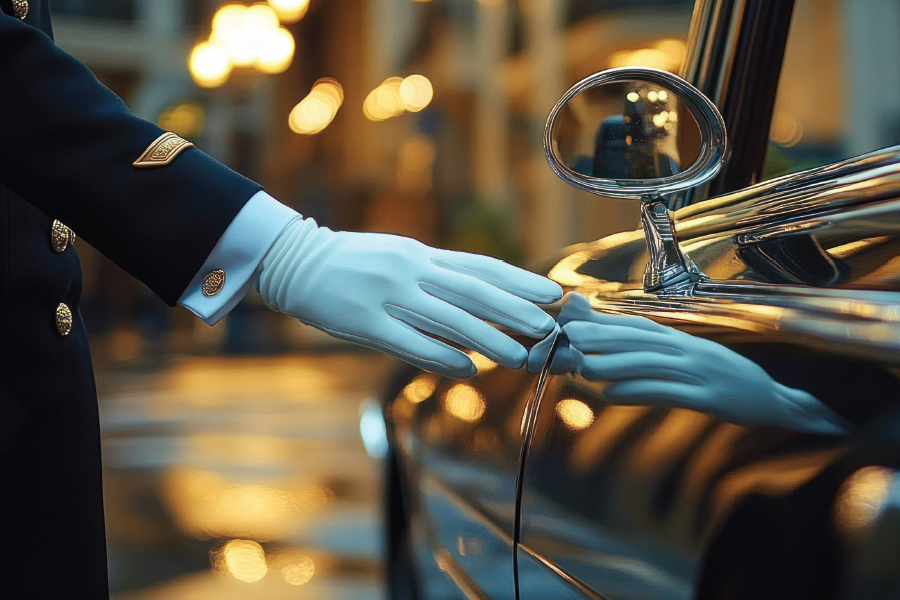
In contrast, executive chauffeured group transportation is defined as a “premium, pre-arranged travel service” that uses high-end, professionally maintained vehicles and expert chauffeurs. Beyond basic transportation, these services prioritize luxury, professionalism, discretion and reliability, and are tailored for corporate travel, special events, and airport transfers, meetings, conferences or events.
“When ground transportation is done right, no one notices,” says Versace. “But when it’s done professionally, everyone arrives safely, on time and confident that they were cared for. That’s hospitality – and that’s what we deliver – Hospitality on Wheels.”