
Gone are the days when all business travelers needed was a desk to work on, free WiFi and some decent meal service in their hotel room. Today, they want more: flexibility around disruptions and delays, a focus on traveler wellness, stunning bleisure opportunities and smart digital capabilities.
The business travel industry is responding in kind with a host of programs that focus on hyper-personalization. The result is an ongoing transformation of the business traveler’s hotel stay – one that morphs from the mundane to “an elevated business travel experience.”
Business travelers are carrying higher expectations from their hotels, and their voices are loud and clear. Driven primarily by eager Millennials and Gen Z’ers, who are projected to account for 83 percent of hotel guests by 2030 (according to research from Forbes), this demographic group is at the forefront of changing traveler preferences. Reportedly, their spending capacity is expanding fast too – expected to grow to $2.7 trillion over the next several years.
As “digital natives,” this group sees access to intuitive and tech-forward hotel experiences as non-negotiable, from mobile check-ins to self-service technology (friendly service robots, anyone?). Instant mobile messaging platforms that provide real-time, individualized support are also important to Gen Z’ers, especially in cases of flight delays or other disruptions.

Accompanying their rise in influence is a simultaneous focus on the issues they care about the most. For example, many Gen Z’ers are asking the hotel industry to take deeper dives into sustainability practices, such as relying on local products that support local farms and communities, in addition to now-mainstream practices like recycling.
Wellness is also important. According to a report by FCM, “Over half of Gen Z travelers prioritize their wellbeing on the road, whether through upgrades or incorporating leisure activities.” Another popular yet significant undercurrent is making sure a business trip is “culturally-immersive” and grounded in authentic local experiences.
Cost-effective Decisions
Whether it’s staying in a hotel that has historical or cultural significance, or posting Instagrammable pictures of local cuisine, the business trip is quickly becoming the centerpiece of an overall elevated experience – for travelers of all ages. This has not gone unnoticed by many high-end and boutique brand hotels.
“Luxury or lifestyle properties are a value-add when they provide a layered, curated experience that goes beyond a standard stay,” says Brian Macaluso, Sonesta’s vice president of global sales. “The additional expenses can be justified by viewing these properties as an investment in the traveler’s productivity, wellness or overall experience satisfaction,” Macaluso explains.
“We immerse guests in the culture and spirit of the destination for an authentic stay experience,” reflects Elizabeth Scruggs, brand leader at the Tapestry Collection by Hilton. “For example, staying at a property with a unique personality like The Slate Denver offers options for travel managers beyond the traditional large-scale ballrooms or meeting spaces.”
As a unique group meetings venue, The Slate breathes new life to the historic Emily Griffith Opportunity School; its academic legacy is woven into the typewriter artwork on the walls, a front desk styled like a card catalog, and carefully preserved original staircases and school corridors. It acts as an “in-house” experience that can also support team building efforts.
Evaluating ROI
How are travel managers deciphering traveler preferences? How do they assess which add value (versus the ones that don’t)? Negotiating hotel rates, prioritizing add-on’s and understanding fee structures were already complex enough tasks. Now, buyers must lean into how evolving traveler expectations impact travel program decisions.
“For travel managers, integrating elements such as late checkout, fitness or spa access, or dining credits into negotiated packages enhances the travel experience without significantly impacting cost. These inclusions can lead to improved performance and retention among employees,” notes Jon Elliott, managing director of worldwide sales at BWH Hotels.
Hotel wellness amenities are visibly competing for travelers’ attention and are often part of a larger “travel wellness experience” that can impact ROI. This runs the gamut from simple to fancy – think meditation pods, on-demand fitness, sleep optimization programs, organic plant-based menu options, and even curated local coffees.
“Luxury and lifestyle hotels are increasingly seen as strategic assets in business travel programs, not just indulgences,” Elliott says. “Travel managers justify the added expense by focusing on the experiential return: improved mental health and wellness, productivity and team engagement, and adding a degree of local flavor and connection to the business travel experience.”
Bleisure Gets a Boost
Often, having a unique hotel stay for the business portion of the trip is just the beginning. Business trips are notorious for the tendency to “pack it all in,” with hectic meeting schedules and back-to-back after-hours networking opportunities. This can make it challenging for business travelers to enjoy their stay or explore the hotel. Having the privilege of continuing the bleisure portion of a trip in the same hotel/location can be seen as a win-win.
“Hilton has continued to see the rising popularity of bleisure travel, with our 2025 Trends Report finding that 25 percent of global respondents plan to travel more for bleisure this year,” says Christiane Cabot Bini, VP global business travel sales at Hilton. “For travel managers, bleisure offerings create tangible value by improving employee satisfaction and well-being.”
On top of that, location remains an essential consideration, she says. “More than ever, travel managers are choosing destinations that support bleisure add-ons. This means balancing proximity to business venues and corporate offices with access to local attractions, dining and transit,” Cabot Bini says.
And there seems to be no end to the creative bleisure offerings extended by luxury and lifestyle hotels. For example, Hilton’s Hoffman Hotel Basalt in Aspen includes mountain bikes and e-bikes for guests to explore the surrounding trails and valley, as well as a private beach. The Executive Residency by Best Western, Nairobi, Kenya, offers wildlife safari excursions to the nearby Nairobi National Park, while the Portopia Hotel, BWH WorldHotels Elite in Kobe, offers proximity to the historic Taisan-ji temple and Ikuta Jinja shrine – one of the oldest sites in Japan.
“Today’s business travelers want accommodations that combine comfortable workspaces and tech-forward amenities during the workweek with seamless options to extend their stay into the weekend,” explains Cabot-Bini. So when the hotel itself acts as the catalyst and container for creating valuable experiences, colleagues can bond without even stepping outside the lobby.
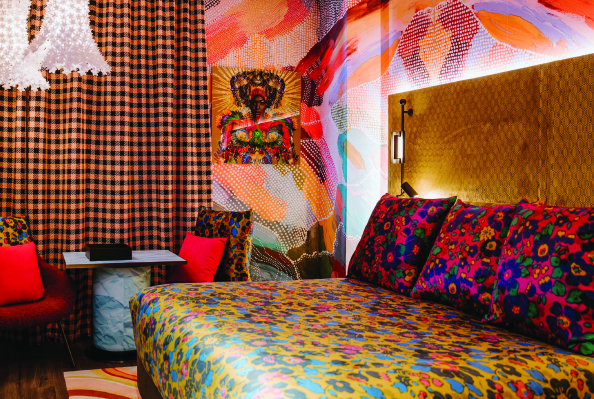
Case in point, the ART Hotel Denver, part of the Curio Collection by Hilton, is lined with post-modern works by acclaimed artists on every floor (and even the elevators). “We strive to create an environment where guests traveling for business can focus on work when needed, and recharge creatively with the hotel’s inspiring design and curated art collection,” shares Dorian Phillips, general manager of The ART Hotel.
Or properties in The James, Royal Sonesta, or Classico Collection, “where you are able to provide an experience that elevates the stay of a bleisure traveler whether it be through culture, amenities or food and beverage offerings,” Macaluso suggests.
Tech Talk
Beyond artistically designed meeting spaces and the convenience of being close to natural and historic wonders, hotel technology is a critical part of the bleisure travel experience too, Macaluso adds. “We’ve seen firsthand how a lack of functional technology can hinder plans,” he cautions. “The lack of innovative and functional workspace for business travelers can hinder productive meetings, brainstorming sessions, etc.” At Sonesta, he says, the mission to provide “top-line and seamless tech.”
Digital transformations have been reshaping the business travel landscape at a dizzying pace, especially with the advent of AI and NDC platforms. Traveler profiles and aggregated content help hotels to “know” their visitors. Does your traveler prefer networking options that provide an energizing alternative to traditional boardroom settings? Or would he/she prefer mindfulness integrated into the guest experience to help ease high-pressure schedules? This attention to detail can make all the difference in a trip.
According to a report by Amadeus, 41 percent of business travelers see AI personalization as part of their ideal stay. Whether it’s a mobile app or an online booking tool, capturing these preferences within customer-friendly and reliable technology is vital. “Even well-designed hotels fall short if the technology does not support the traveler’s needs,” notes Elliott.
“Leaning into traveler expectations from the outset would go a long way to solving the biggest challenge for most travel managers: keeping travelers within the official travel program and maintaining oversight of costs, policy and where employees are staying,” observes Paul Raymond, chief commercial officer at HotelHub in Manchester, UK.
“This means not only giving travelers access to a wide range of hotel content but providing booking tools that deliver the slick experience they’re used to on retail sites, with functionality that allows them to easily compare options, read reviews and view onsite amenities to make informed choices. By bringing booking tech in line with traveler preferences, travel managers will retain authority over their program while travelers feel like they have control over their stay,” Raymond says.
Too Many Choices?
“The more, the better” may sound great to travelers, but it often leaves travel buyers scratching their heads. From hotel loyalty programs to entertainment and wellness partnerships, evaluating which add-ons create the best bang-for-the-buck can be a tedious process.
“While bleisure travel can increase job satisfaction and boost retention for traveling employees, make sure you have an understanding of the add-ons that are most important for your travelers,” advises Kathy Bedell, SVP Americas at BCD Travel. “Dig into your data and traveler insights to see what’s important and if there are any services that can be cut. Understand your traveler. Not everyone will value the same things when it comes to hotel stays. Traveler engagement is key – pre- and post-trip surveys, revisiting hotel policies, and updating traveler profiles are all ways to ensure personalization in business travel.”
Hotel partnerships that connect with wider products and interests are another kind of add-on, which serve as a differentiator in the great sea of hotel stays. From Sonesta’s strategic partnership with Rolling Stone for their “Musicians on Musicians” program to Hilton’s wellness partnerships with Peloton, Hyperice and Calm, these add-on’s provide immense value for travelers who are inclined towards these types of experiences.
“Add-ons can enhance value for bleisure travelers by providing amenities that support both business and personal needs,” says Macaluso. “For travel managers, this means looking beyond nightly base rates to assess the total value of the partnership. These benefits create a greater return on investment for your travelers when you look at the holistic experience.”
When hotels attune themselves to business travelers’ changing preferences, they set their sights on both short-term and long-term success – and corporate travel buyers are listening. “It’s crucial for travel managers to recognize that travelers are often much more emotionally invested in where they are going to stay than how they are going to get there – and it’s understandable when you consider how accommodation can make or break a business trip,” Raymond recommends. “Elements like smart design, digital capabilities and use of AI are not extravagant expectations in this day and age; they’re what travelers are increasingly accustomed to in their own homes and offices.”